Trending in Savara’s World
No discography available.
Story
Quick Facts
Born
1987
1987
From
Kenya
Kenya
Journey
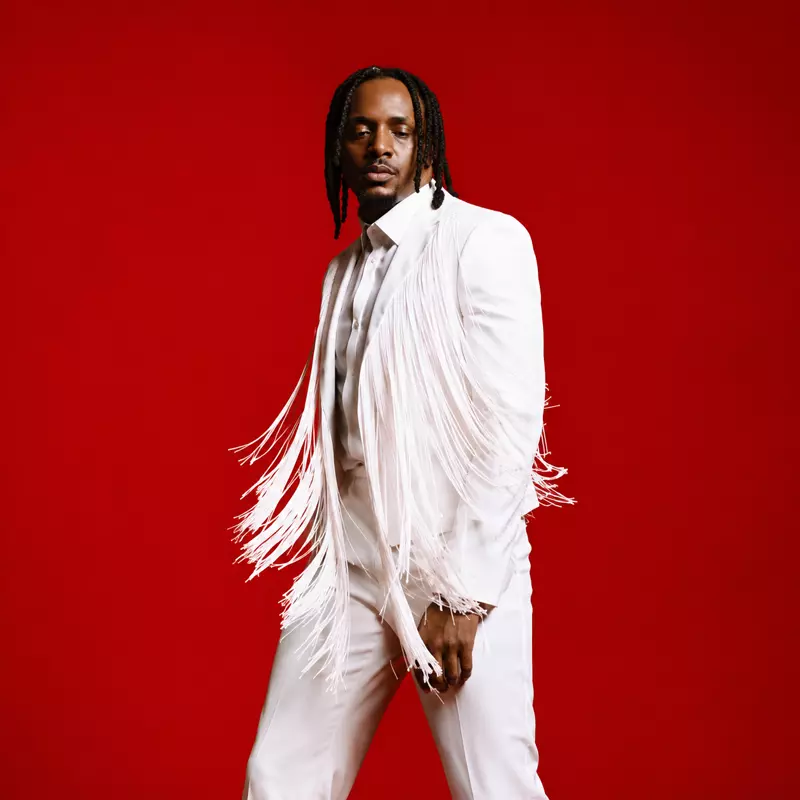
Delvin Savara Mudigi, widely known simply as Savara, is a Kenyan singer, songwriter, producer, multi-instrumentalist, and entrepreneur whose career spans both group success and solo work. He first rose to prominence as a member of the Afropop band Sauti Sol and later expanded into an independent career. Over nearly two decades he has played an important role in shaping contemporary East African pop music, contributing as both a performer and a producer. His work with Sauti Sol helped bring Kenyan Afropop to international audiences, while his solo releases have explored broader influences including African pop, R&B, and reggae-inspired sounds. Alongside his musical activities, he has also established himself as a cultural entrepreneur involved in artist development, publishing, and initiatives aimed at strengthening Kenya’s creative industries.
Savara was born, May 1987 in Nairobi and grew up in the Maringo Estate area of the city in a modest household where music was an everyday presence. His father exposed him to reggae and Lingala music, while his mother’s church hymns and popular television music programs widened his early influences. He later attended Upper Hill High School, where his interest in the performing arts developed further. While still a student, he formed an acappella group with classmates Bien-Aimé Baraza and Willis Chimano within the school’s music club, Voices in the Light. After completing high school, Savara continued his studies at Africa Nazarene University, where he pursued a degree in Commerce and Finance, an education that later influenced his approach to the business side of music.
In 2005, Savara joined Baraza and Chimano in formally establishing the group that would become Sauti Sol. Soon afterward they met guitarist Polycarp Otieno, completing the quartet. The group initially performed as an acappella act before transitioning toward a fuller instrumental sound. Their name combined the Swahili word “Sauti,” meaning voice, with the Spanish word “Sol,” meaning sun. Performing at venues and competitions around Nairobi, including the Spotlight on Kenyan Music event at the Alliance Française Nairobi, the band gradually attracted attention for blending Kenyan musical traditions with contemporary pop influences.
Their debut album "Mwanzo" appeared in 2009 and marked a major milestone in the band’s rise, establishing them as a leading act in Kenya’s pop music scene. The follow-up album "Sol Filosofia" (2011) further expanded their audience and earned several nominations and awards. One of the project’s music videos received Best Music Video at the Kisima Music Awards. During this period Savara emerged as one of the band’s primary producers and instrumentalists, contributing to songwriting, production, and arrangements on drums and guitar across many of the group’s recordings.
The band’s third album, "Live and Die in Afrika" (2015), significantly broadened their international profile. Released online as a free download for 48 hours, the project attracted widespread attention and included songs that gained strong regional popularity. Later projects continued to expand their reach. The collaborative album Afrikan Sauce (2019) featured artists from across the continent, including Burna Boy, Tiwa Savage, Vanessa Mdee, and Yemi Alade. The group later released Midnight Train (2020), continuing their exploration of contemporary African pop while building international collaborations. Through these projects Sauti Sol toured widely across Africa, Europe, and North America, helping raise the global profile of Kenyan music. Savara’s role as both producer and songwriter placed him at the center of the group’s creative direction.
Throughout his career Savara has been associated with numerous awards and recognitions linked to both his work with Sauti Sol and his independent projects. He received Grammy certification for his contribution to the album Twice as Tall by Burna Boy (2021). With Sauti Sol he shared honors such as Best African Duo/Group/Band at the African Muzik Magazine Awards in 2019. He also received Producer of the Year recognition in 2017, was named Spotify EQUAL Africa Artist of the Month in 2022, and won a Kalasha Film and TV Awards prize for Best Original Score for the Kenyan film Disconnect. As a group, Sauti Sol also received nominations and recognition from platforms including the MTV Europe Music Awards, BET Awards, and Channel O Music Video Awards.
Savara has also been active as a cultural entrepreneur working to strengthen the creative economy in Kenya. Together with his bandmates he co-founded Sol Generation Records, a label and publishing company created to support emerging African artists. Through the platform they helped develop performers such as Bensoul and Nviiri the Storyteller. His broader initiatives include the Sol Fest music festival, the creator distribution platform Hustle Sasa, and the Press Play training program for young artists developed in partnership with the British Council. These activities reflect his broader commitment to strengthening infrastructure for African creative industries.
Following the band’s announcement of an indefinite hiatus in the early 2020s, Savara increasingly focused on solo work. His debut solo album "Savage Level" appeared in 2022, followed by the EP "No Overthinking" and a series of singles including “Show You Off,” “Balance,” “Reggae ya Kinyozi,” and “Sianda.”
Outside of music he is known for interests in fitness, vegetarian living, and entrepreneurship, presenting himself publicly as both an artist and a business-minded creative professional. His personal life has also drawn public attention through his relationship with Yvonne Endo, whom he met at a concert in Nairobi.
In recent years he has continued expanding his solo catalogue while collaborating with artists across East Africa. His music has also received Grammy consideration in categories including Best African Music Performance and Best Global Music Performance, reflecting growing international recognition for his individual work. At the same time he remains actively involved in initiatives supporting artist development, publishing, festivals, and technology platforms designed to empower African creators.