Will the alleged attack on Helen Haines change Australia and its politics?
The MinefieldPlay episode
Show notes
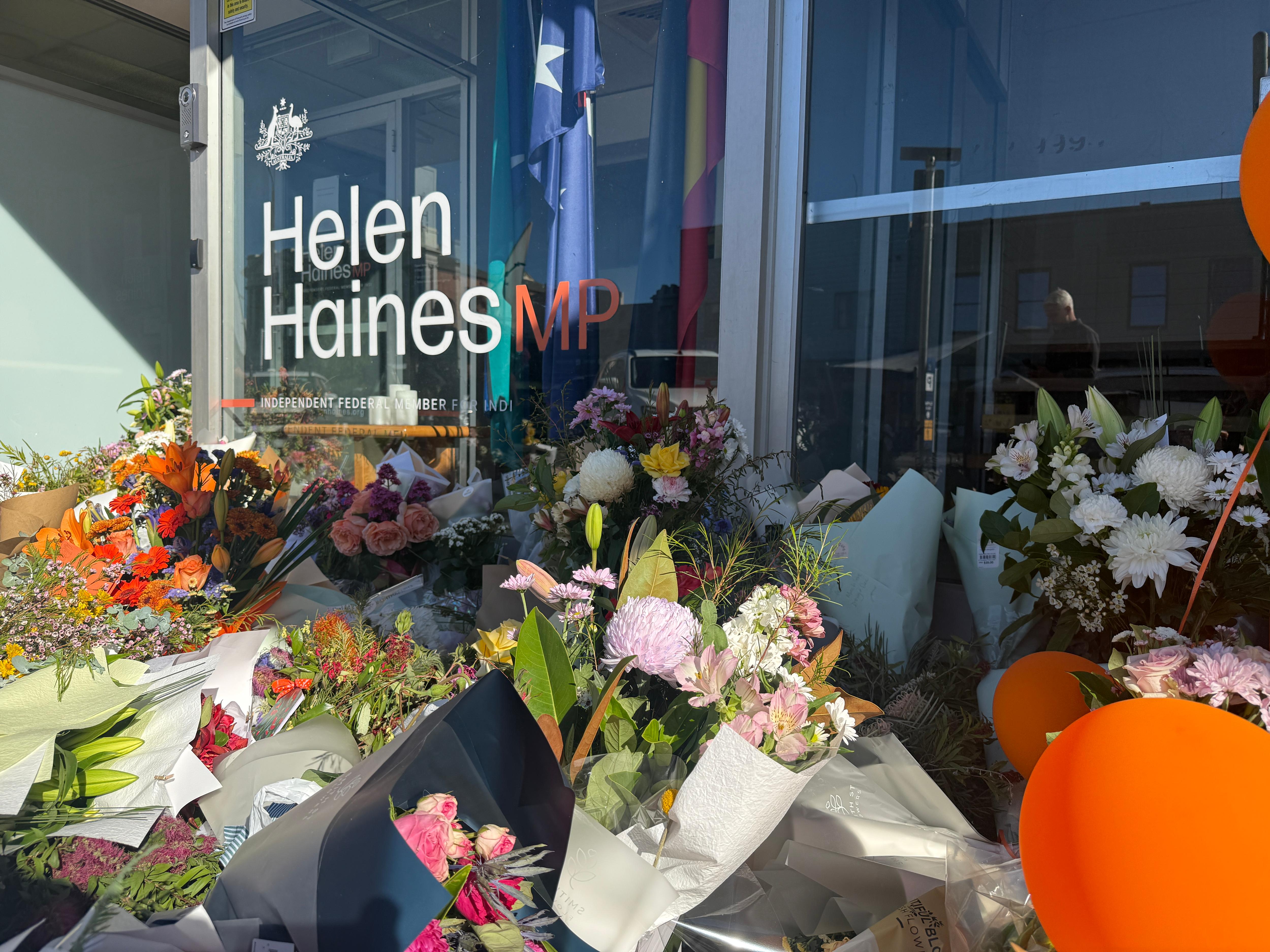
The alleged attack on independent MP Helen Haines outside her electorate office in regional Victoria came as a shock to a nation with so little history of violence directed at elected representatives. The driver of the Toyota LandCruiser that pinned Haines against her car, causing her to lose both legs, has been charged with several offences, and appeared on Wednesday before the Wangaratta Magistrates’ Court. He remains in custody.
The police are continuing their investigations into the driver’s mental health and motivations. But regardless of whether his actions were politically motivated, the alleged attack has had an immediate effect on Australian politics. Prime Minister Anthony Albanese reiterated his plea to “lower the temperature” of political debate. Opposition leader Angus Taylor insisted “that political violence must never be accepted as part of public life”.
One by one, politicians came forward with their own accounts of the abuse, harassment and violent threats that are part of the “new reality” of Australian politics. Only last week, Labor front-bencher Anne Aly reported receiving 19 death threats on social media following comments by Liberal MP Angie Bell that she and the prime minister be “shamed and stoned in the square” over an Australian Tax Office decision (comments that Bell has since described as “regrettable”).
ASIO chief Mike Burgess gave a sober warning about the “permissive environment of violence” in this country. Meanwhile, Governor-General Sam Mostyn appealed to the way that Helen Haines herself modelled civility and dedication to her community, urging Australians to:
“ensure that we are in fact disagreeing well, not fighting with one another, not descending into violence and chaos and division. Most importantly, that we learn or relearn to exercise our muscle of decency.”
While the alleged attack may be unprecedented in Australia’s history, and its life-altering consequences for a figure as respected and admired as Haines is appropriately arresting, there is something about the litany of responses that feels troublingly familiar.
Earlier this year, following the gruesome killing of former UK politician Ann Widdecombe, the widower of Jo Cox, the Labour MP who was murdered in 2016 at the height of the Brexit debate, admittedly to feeling “much less optimistic” about the UK’s political culture:
“In the aftermath of Jo’s murder, I think there was a real sense of shock, of horror across the political spectrum and the whole country did come together for a moment to say this is not how we want to conduct our politics. But I think in the years that followed we have gone further into our tribes.”
Attacks on representative figures, whatever their motivation, cannot help but be experienced as an attack on the protected institutions that govern our common life. And they necessarily have profound consequences for the way we practice democratic politics — from reluctance to express political convictions that might attract online threats to a more general unwillingness to be accessible to one’s constituents.
Threats of violence and abuse should not simply be accepted as “part of the job” for politicians. But given the “permissive environment” cultivated by the social media, what can be done to ameliorate the likelihood of violence?
Guest: Rob Manwaring is an Associate Professor of Politics and Public Policy at Flinders University.