← The Minefield
Why is our response to humanitarian crises so complicated — and inconsistent? artwork

Why is our response to humanitarian crises so complicated — and inconsistent?

The Minefield
52:49
Play episode

Show notes

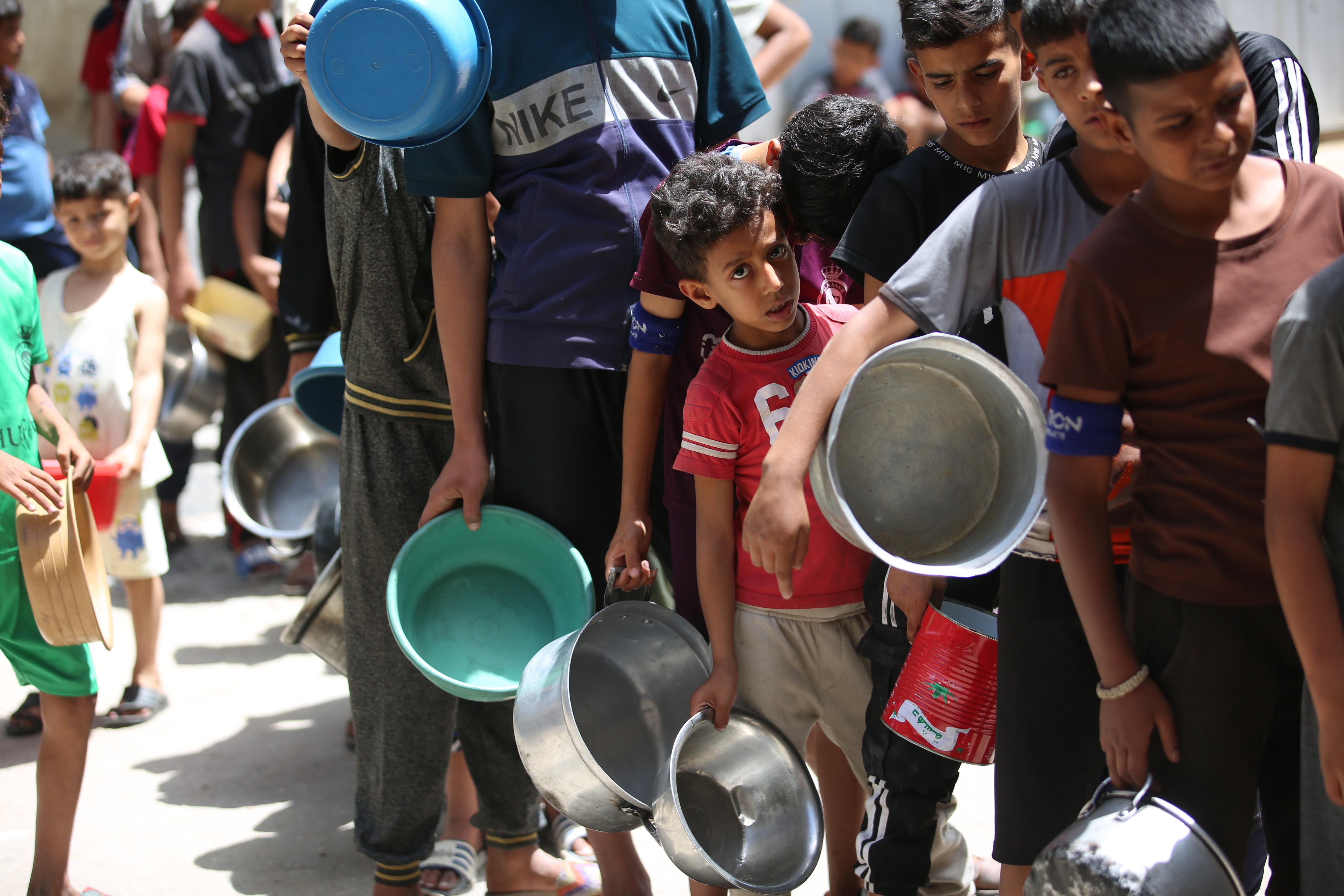
Over the last two years, many in Australia and around the world have watched in horror as Sudan, Gaza and other zones of mass violence descend into humanitarian crises of devastating proportions. And while the cause of each crisis is unique, the consequences tend to share common characteristics — for especially civilians: millions of people are displaced and left without homes to return to; basic social infrastructure, hospitals and schools are reduced to ruins; tens of thousands of men, women and children are targeted for killing or die due to fighting, disease and the lack of food; sexual violence and torture are widespread; and starvation is deliberately employed as a weapon of war. The scale and sheer desperation of the humanitarian crises in Sudan and Gaza ought to sear the souls of anyone committed to the notion of human dignity and the belief in a common humanity. But the tendency of so many in Australia — though we are by no means unusual in this regard — is to permit humanitarian concern and moral attentiveness to the plight of others to pass in and out of focus. Is there a moral imperative on citizens to remain attentive, to enlarge their capacity for sympathy, to make democratic “noise” in the policy deliberations of our elected representatives? If so, how might the capacity for that attentiveness be cultivated, and in what ways should it manifest in order to serve the people we are trying to protect?

More from this show

More
  1. Why do we keep remaking films and TV shows?

    Over the last decade, the proliferation of streaming services made more movies and television series available to more people than ever before. It revolutionised what we watch (inc…

    54:40
  2. These days everything is political — is that bad for politics?

    Writing in the 1850s, at the advent of what we would come to understand as the popular press — which is to say, periodicals for mass distribution, rather than aimed at paid-up memb…

    54:36
  3. If AI can’t be brought under human control, why are we still pressing ahead?

    When the history of artificial intelligence is written, the middle months of 2026 may well emerge as a kind of turning point. For this was the period when hundreds of programs or “…

    54:36
  4. Last Words: Is ‘Abbey Road’ a fitting end to the Beatles?

    In our previous explorations of famous “last words” — performances or compositions delivered with a certain end in view, with a sense of either culmination or parting, or with an e…

    54:36
  5. Does a ‘digital duty of care’ put free speech at risk?

    Evidence has been mounting for more than a decade that social media tears away at the fabric of democratic life by eroding the conditions of deliberation, shared understanding and…

    54:36
  6. Is loyalty a virtue?

    It is surely one of the more perverse achievements of modern marketing to have taken words that have a certain moral valence — which is to say, words that connote intimacy or an in…

    54:45
Now Playing