‘The Devil Wears Prada’ — high fashion or vision of hell?
The MinefieldPlay episode
Show notes
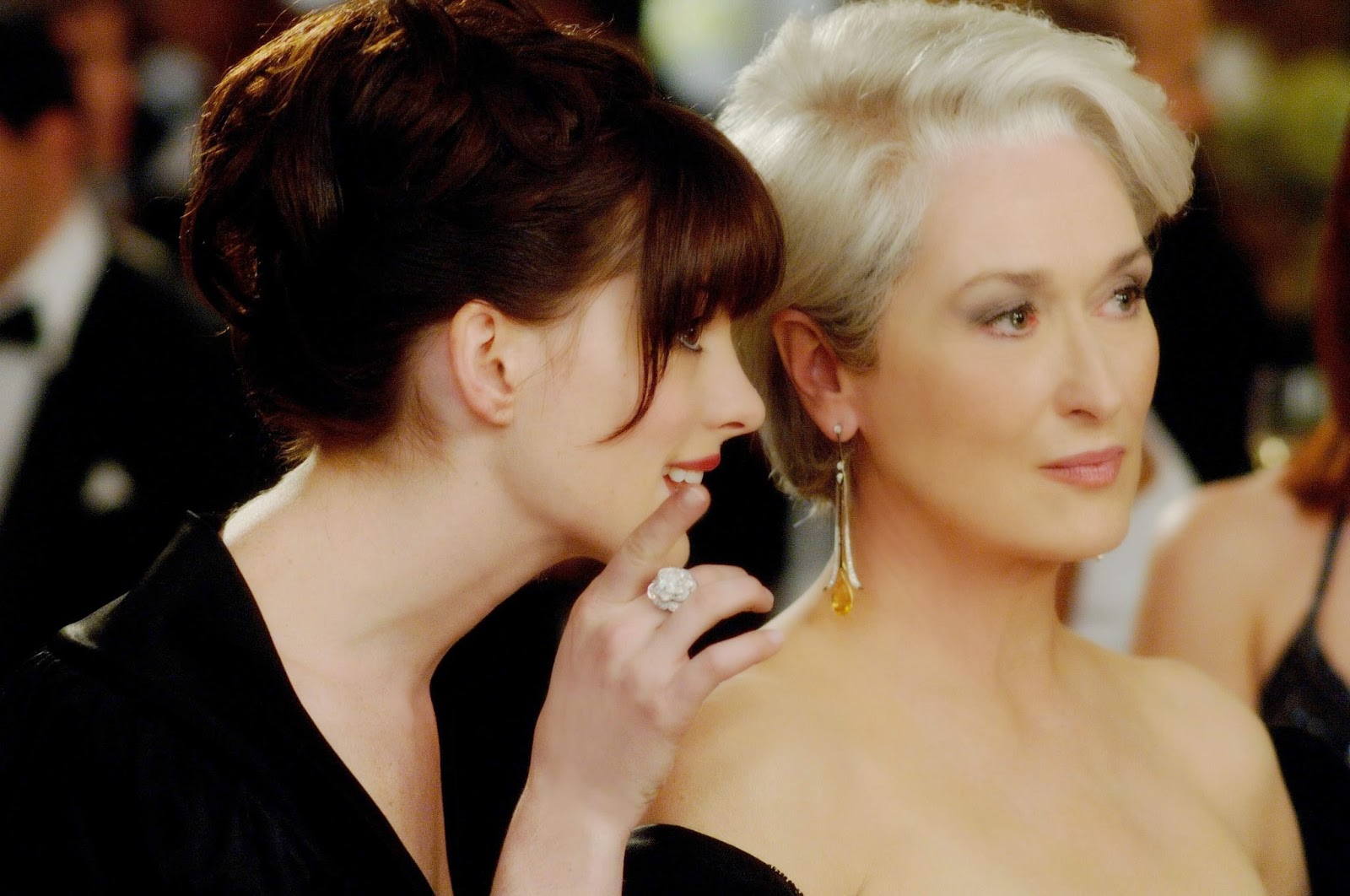
It’s no mystery why David Frankel’s 2006 film The Devil Wears Prada was a hit. The movie had all the ingredients of a certain kind of success. Take a bestselling novel (by Lauren Weisberger) about a midwestern girl trying to make it in the big city, place it in the hands of a screenwriter known for broadly appealing rom-coms (Aline Brosh McKenna), cast a much-loved screen legend in an uncharacteristically villainous role (Meryl Streep) and put her alongside a doe-eyed starlet on her way to becoming a superstar (Anne Hathaway) … then set the plot in the rarefied world of haute couture and divide it between New York and Paris — what’s not to love?
What is a little surprising is that The Devil Wears Prada should have achieved the quality of a certain timelessness (despite being released a year before the now ubiquitous iPhone). It is a cinema classic whose enduring appeal and pop cultural resonance have been demonstrated by the global success of a sequel, two decades on.
But does the film’s success point to narrative and thematic elements that run much deeper than the appeal of the glossy surface?
Take, for instance, the obvious Faustian connection, evoked both in the title of the film and the blunt words of Emily (played by Emily Blunt) to Andrea Sachs (Hathaway): “You sold your soul the day you put on your first pair of Jimmy Choos.” The narrative arc of the film is, broadly, the naïve Andy’s “descent” into the world of high fashion, cultural influence and sterile, superficial beauty, only to step back from the hellmouth of corruptibility at the end, lest she too share Miranda Priestly’s (Streep) unhappy fate. Does this mean that Andy also shares in Faust’s culpability, less a victim than a participant in his own damnation?
Who, then, plays the role of the seducer? Who is the film’s Mephistopheles, also trapped in a hell of diabolical design? Is it Emily — starved, harried, contemptuous, miserable? Is it Christian Thompson (Simon Baker) — urbane, erudite, well-connected, corrupting, and ultimately impotent? Surely it is Nigel (Stanley Tucci) — personable, appealing, but a slave to Miranda’s imperious demands, and a prisoner to a corrupted vision of beauty (“size six is the new fourteen”). And to what extent does Andy escape unscathed, given her string of broken relationships?
The Devil Wears Prada also draws deeply on those specifically New York stories of tragic or monstrous success. Stories like Alexander Mackendrick’s 1957 The Sweet Smell of Success (with imperious newspaper columnist JJ Hunsecker playing the Miranda Priestly role) and Darren Aronofsky’s 2011 Black Swan, or John Badham’s 1977 Saturday Night Fever and Mary Harron’s 2000 American Psycho, or Oliver Stone’s 1987 Wall Street and Taylor Hackford’s 1997 The Devil’s Advocate. Is New York really a place of opportunity, or is it the kind of environment in which the price of success is one’s own soul?
The transformation that Andy Sachs undergoes in the first half of the film initially looks like an external accommodation to a class or caste of society where one wants to belong — a sartorial equivalent of Eliza Doolittle in My Fair Lady, though with Nigel in the role of Henry Higgins. But if there is any lesson from the film, it is this: in a culture where appearance is essence — which is to say, how you look is who you are — the change of appearance rarely remains skin deep.
Finally, The Devil Wears Prada trades on, and in no way resolves, one of the central contradictions in modern democracies — one that is explored at length by Elizabeth Anderson: in political cultures that prize agency and democratic self-determination, many workplaces are tyrannies, and bosses despots. The glimpses we get of Miranda’s unhappy home life, however sympathy inducing they are, does not reduce our sense that she presides over a domain in which she has no equals, no one to whom she is morally answerable. All there is, is the standard of aesthetic perfection and cultural sway to which she has sacrificed everything (apart from, of course, her Harry Potter-devouring twin daughters).
It is therefore diabolically fitting that, at the film’s end, Nigel’s ambitions for professional self-determination and Emily’s momentary escape into the world of bread rolls and chocolate pudding are both frustrated. They end the film, presumably, where they began — namely, imprisoned and mendicant.
The question is: where does the film leave its audience? Are we left longing for the world of glamour that had seduced Andy — and us, vicariously — or are we content with the nobility of a job reporting for a modest newspaper that would soon be swallowed by the advent of social media
Guest: Clare Bowditch is an Australian musician, broadcaster, author and actress.