
Influence Profile
No genre data available
Genre information will appear here once available
Trending in Aziz Mian’s World
No discography available.
Story
Quick Facts
Born
1942
1942
From
Pakistan
Pakistan
Journey
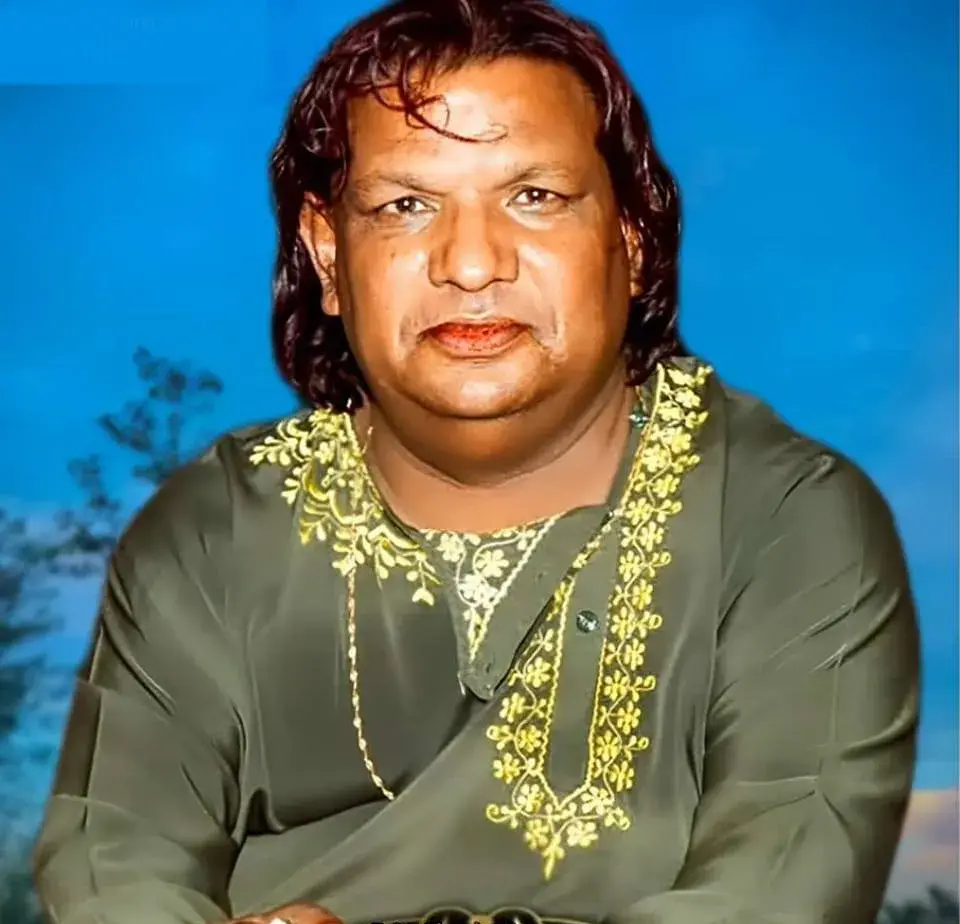
For decades, the unmistakable voice of Aziz Mian echoed through concert halls, shrines, and gatherings across South Asia, captivating audiences with performances that seamlessly united music, poetry, and spiritual reflection. Revered as the "Shahenshah-e-Qawwali" (King of Qawwali), he transformed devotional music into a powerful vehicle for philosophical inquiry, pairing a commanding vocal delivery with lyrics that challenged listeners to contemplate faith, morality, and the human experience. More than a celebrated qawwal, Aziz Mian was a composer, poet, and scholar whose intellectual depth distinguished him as one of the genre's most remarkable figures.
Born Abdul Aziz on April 17, 1942, in Delhi, British India, he relocated with his family to Lahore, Pakistan, following the Partition in 1947. His passion for music emerged early, leading him to study the harmonium under Ustad Abdul Wahid Khan before completing sixteen years of formal training at the Data Ganj Bakhsh School. His education extended beyond music; he earned master's degrees in Urdu Literature and Islamic Studies and Philosophy from the University of the Punjab, while also developing a deep understanding of Persian literature, comparative religion, and Sufi thought. This rare combination of academic scholarship and musical mastery would later define both his artistry and his lyrical approach.
Aziz Mian began performing professionally during the 1960s, but a landmark appearance before Shah Mohammad Reza Pahlavi of Iran in 1966 brought him widespread recognition and earned him a gold medal from the Shah. Early performances for members of Pakistan's armed forces also led to the nickname "Fauji Qawwal." As his reputation grew. His performances often stretched well beyond conventional lengths, combining extended improvisation, spoken interpretation, and dramatic storytelling that allowed audiences to explore the deeper meanings behind his lyrics. Signature recordings such as "Main Sharabi," "Allah Hi Jaane Kaun Bashar Hai," "Teri Soorat," "Hashr Ke Roz," "Nabi Nabi Ya Nabi Nabi," "Aadmi Hai Benazir," and "Ye Hai Maikada" became enduring classics, with "Hashr Ke Roz" and "Main Sharabi" particularly celebrated for their emotional intensity and expansive performances.
Performing with the renowned Aziz Mian Qawwal Group, he also interpreted works by distinguished poets including Allama Muhammad Iqbal, Jigar Moradabadi, Qamar Jalalvi, Saifuddin Saif, Qateel Shifai, and Tabish Kanpuri. His career unfolded alongside legendary qawwals such as Nusrat Fateh Ali Khan, the Sabri Brothers, and Amjad Sabri, all of whom helped introduce qawwali to wider international audiences.
His contributions to Pakistani music earned significant recognition throughout his lifetime. In 1989, he received the Pride of Performance, one of Pakistan's highest civilian honors, while his performances across Iran, the Middle East, Europe, and South Asia established him as an internationally respected ambassador of qawwali. He also became known for presenting some of the longest commercially released qawwali performances ever recorded, reinforcing his reputation for combining endurance, scholarship, and artistry.
Aziz Mian passed away on December 6, 2000, in Tehran, Iran, after suffering a heart attack while visiting the country to perform during religious commemorations. He was 58 years old, leaving behind a body of work that continues to inspire audiences and performers around the world.
Today, Aziz Mian is remembered as one of qawwali's most original and intellectually influential voices. His ability to merge devotional music with profound philosophical inquiry elevated the genre beyond performance alone, creating works that continue to resonate across generations.